

Creating a marriage biodata can feel overwhelming at first. I’ve been there. When my family asked me to prepare my marriage CV, I didn’t even know where to begin. It felt awkward and formal, yet so important.
Through trial, research, and advice from relatives and friends, I figured out how to make biodata for marriage that genuinely represented who I am. If you’re in the same boat, don’t worry. This guide will walk you through everything you need to know, from choosing the proper marriage biodata format to creating a polished, authentic profile.
Whether you’re looking for a simple marriage CV format or a more customized marriage biodata template, you’re in the right place.
What Is a Marriage Biodata?
Let’s start with the basics.
A marriage biodata is a personal profile that provides essential information about a prospective bride or groom. It’s not a resume. It’s more like a formal introduction to help families assess compatibility.
It usually includes:
- Basic personal details
- Family background
- Education and profession
- Religious and cultural details
- Hobbies and preferences
- Partner expectations
This document is widely used in South Asian cultures, especially in arranged marriage settings. In places like India, Pakistan, and Bangladesh, a Bangladeshi marriage biodata is often the first step in the matchmaking process.
My First Attempt: What Went Wrong
I remember typing out my first marriage CV on Microsoft Word. I used a resume template, which was a big mistake.
It looked cold. Too professional. It didn’t feel like “me.”
The problem? I used a job-style CV format instead of a marriage biodata format. That’s when I realized this isn’t about impressing HR. This is about giving someone a genuine snapshot of who I am.
I needed to find the right tone, the correct format, and the right content.
Step-by-Step: How to Make a Biodata for Marriage
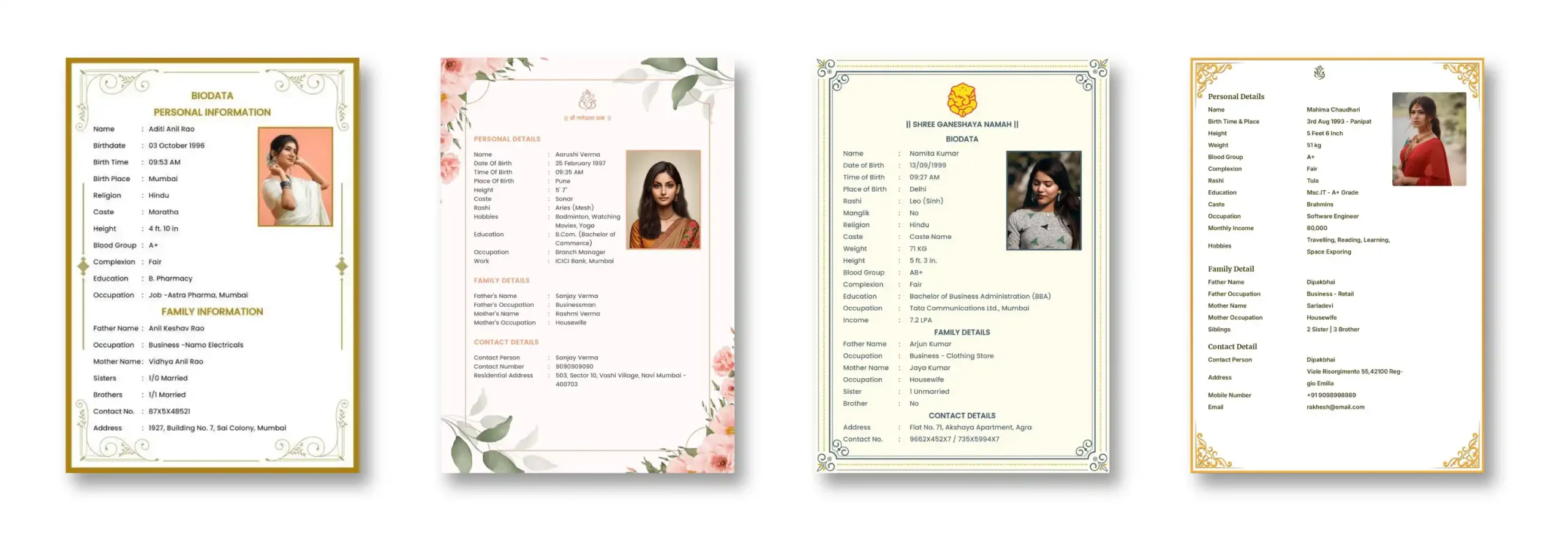
Let’s break it down step by step. Here’s how I finally got it right.
Choose the Right Marriage Biodata Format
There’s no one-size-fits-all biodata format. The style you choose should reflect your background and preferences.
Standard marriage biodata templates include:
- Traditional format (used in arranged marriages)
- Modern minimalistic layout
- Religious-specific (Hindu, Muslim, Christian, etc.)
- Bangladeshi marriage biodata layout (uses both English and Bengali)
I chose a modern format—clean, clear, and easy to scan—but I made sure to include everything my family would want to share with another family.
If you’re not sure where to start, try using a marriage biodata word format template. Word documents are easy to edit and personalize.
Start with Basic Information
This is where you introduce yourself.
Include:
- Full name
- Date of birth
- Age
- Height
- Weight
- Gender
- Nationality
- Religion & caste (if applicable)
- Mother tongue
- Marital status
Be honest and transparent. I made the mistake of skipping my height and weight initially. My aunt noticed — and insisted I add them. These small details do matter to many families.
Include Your Contact Details
Don’t forget this part. Otherwise, how will they reach you?
Include:
- Mobile number
- Email address
- City and country of residence
If your parents or relatives are managing the process, include their numbers, too.
Share Your Education and Profession
This section is crucial, especially for working professionals.
Mention:d
- Highest qualification
- Name of university/college
- Job title and company name
- Annual income (optional but often expected)
Try not to brag. Just state the facts. I used simple bullets for clarity.
Example:
- B.Sc. in Computer Science, BRAC University
- Working as a Software Engineer at [Company Name]
- Based in Dhaka, Bangladesh
- Annual income: BDT 12,00,000
Describe Your Family Background
In South Asian marriages, family matters a lot.
Mention:
- Father’s name and profession
- Mother’s name and profession
- Siblings (with education/job details)
- Family values and type (traditional, modern, joint, nuclear)
This helps other families assess compatibility beyond just the couple.
Example:
We are a middle-class nuclear family based in Dhaka. My father is a retired bank officer, and my mother is a homemaker. I have one younger brother studying at university.”
Add Personal Traits and Interests
Now it gets personal.
Talk about your personality, hobbies, and lifestyle.
This is where you shine.
Mention things like:
- Hobbies (reading, traveling, cooking, etc.)
- Lifestyle preferences (vegetarian/non-vegetarian, smoker/non-smoker)
- Languages known
- Personality traits (introvert/extrovert, calm, adventurous, etc.)
Keep it honest. Don’t write what sounds “good.” Write what’s true.
State Your Partner Preferences
This part is sensitive but necessary.
Be respectful and realistic. Include:
- Preferred age range
- Height, education, profession
- Religious or cultural preferences
- Location preferences (within country/abroad)
Example:
Looking for a well-educated, family-oriented groom between 28 and 32 years of age. Preferably based in Dhaka or open to relocation.”
Keep it short and positive.
Add a Photo (Optional But Recommended)
In most cases, a photo helps make the biodata more engaging and relatable.
Choose a recent, formal photo — nothing too casual.
Some people include multiple images in their marriage CV format. I preferred adding just one clear passport-style photo.
Save and Share in the Right Format
Use a clean, professional layout.
Export your document as a PDF or keep it in a marriage biodata Word format for easy edits.
I shared mine via email and WhatsApp. Some people prefer printing it out, especially older family members.
My Tips for Making a Great Marriage CV
After creating several versions (and helping cousins with theirs), here’s what I learned:
- Keep it clear and well-structured
- Avoid long paragraphs — use bullet points.
- Don’t exaggerate or lie.
- Make it visually neat (use spacing and consistent fonts)
- Customize your marriage biodata template based on your community norms.
Sample Marriage Biodata Template
Here’s a quick example of what your biodata might look like:
Name: Farhan Ahmed
Date of Birth: 12 July 1990
Age: 34
Height: 5’9″
Religion: Islam
Nationality: Bangladeshi
Marital Status: Never Married
Education: BBA, University of Dhaka
Profession: Finance Manager, Multinational Company
Annual Income: BDT 1,500,000
Family:
- Father: Retired Govt. Officer
- Mother: Homemaker
- Sibling: One younger sister, studying medicine
Hobbies: Reading, playing cricket, photography
Languages: Bengali, English, Hindi
Partner Preferences:
- Age 25–30
- Minimum Bachelor’s degree
- Family-oriented
- Preferably based in Dhaka.
Contact:
Phone: +8801XXXXXXX
Email: farhan@email.com
This sample biodata format can be customized to suit your needs.
Bangladeshi Marriage Biodata: Specific Considerations
If you’re preparing a Bangladeshi marriage biodata, consider these additions:
- Include native language (Bengali/Bangla)
- If you prefer to include religious details (e.g., prayer habits, sect), that’s common.
- Some families like bilingual data: English and Bengali
There are many Bangladeshi marriage biodata templates available online in Word format that you can tweak.
What Not to Include
Here are a few things best left out:
- Past relationships (unless required culturally or personally)
- Excessive personal opinions
- Political views
- Salary bragging
- Irrelevant academic details (like school-level awards)
Keep it elegant and focused.
Final Thoughts
Creating your biodata for marriage isn’t just about facts. It’s about telling your story — briefly, honestly, and respectfully.
Marriage Media in Bangladesh plays a big role in connecting potential partners, and your biodata is often the first impression. Now that you know how to make biodata for marriage, take your time. Ask family members for feedback. Use a good marriage biodata template or a marriage CV format. Edit it. Review it. Make it something you’re proud to share. Through our premium matchmaking service, your biodata is often the first step toward meaningful connections.
Trust me, when you get it right, it feels good. It becomes more than just a document. It becomes a connection point — the start of something meaningful.
Good luck on your journey!
FAQ
How to make a biodata for marriage?
To make a biodata for marriage, include personal details (name, age, height), education, job info, family background, hobbies, and partner preferences. Use a clean and straightforward format, and keep the tone respectful and honest.
How do we make biodata for marriage in BD?
In Bangladesh, a marriage biodata should include both English and Bengali if possible, along with religious background, family values, and a recent photo. You can use a Bangladeshi marriage biodata template in Word for easy formatting.
How to create simple biodata?
Start with basic details like name, age, education, job, and contact info. Add your family background and a few lines about your interests. Use bullet points to keep it clean and easy to read.
What is an example of a marriage bio?
A marriage bio example includes:
- Name: Ayesha Rahman
- Age: 27
- Education: BBA, North South University
- Profession: Marketing Executive
- Family: Father—Businessman, Mother—Homemaker
- Preferences: Looking for a well-educated, kind partner aged 28–32.
What should I write in my bio for marriage?
Write about your background, lifestyle, job, family, and what you’re looking for in a partner. Be honest and keep it respectful. The tone should be formal but friendly.
How to make a good marriage profile?
A good marriage profile is clear, concise, and well-organized. Include updated information, a good photo, and specific but realistic partner preferences. Avoid exaggerations.
How do I write my biodata?
Write it section by section.
- Personal Info
- Education & Job
- Family Background
- Hobbies & Traits
- Partner Preferences
- Use a biodata template to keep it well-structured.
What is biodata for a marriage?
This refers to a marriage biodata template — a structured layout (often in Word format) used to present personal and family details in an organized way for matchmaking.
 Address: House: 8/A, Road 14, Dhanmondi, Dhaka-1209
 Email: